An Oliver Sarony Receipt/Invoice
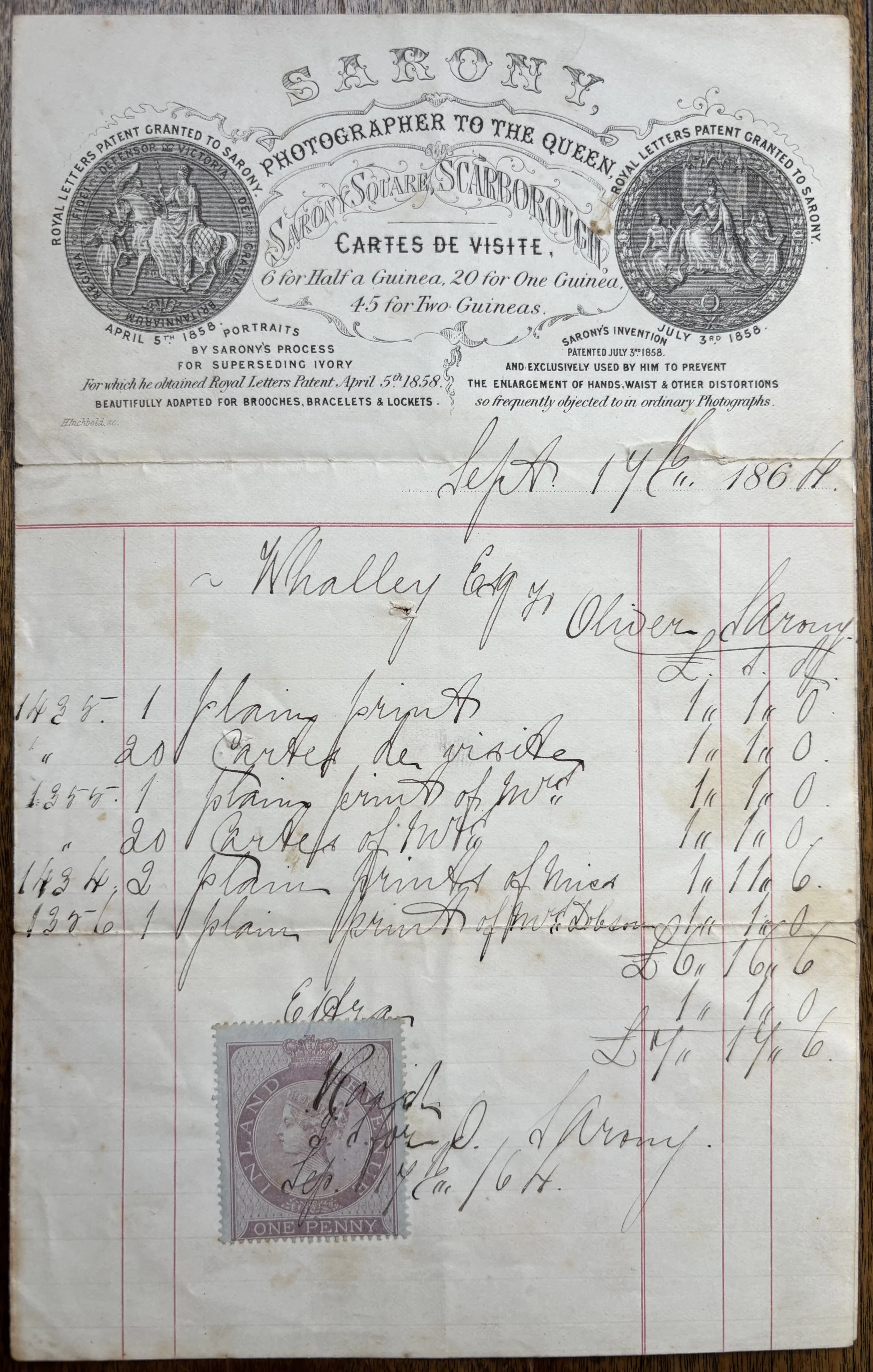
A receipt/invoice for a number of photographic prints from the studio of Oliver Sarony in Scarborough from 1864.
Sometime before Christmas 2025 we were contacted by someone who had inherited their fathers stamp collection. As they were sorting through it they opened an envelope that had been collected for the stamp on the outside of it. What they found inside was a receipt/invoice from Oliver Sarony’s Scarborough Studio. When they offered to send it to us we were over the moon! When it arrived it surpassed our expectations. It is fantastic as you can see from the image above.
The printed heading of the paper lists the prices for Carte de Visites. 6 for Half a Guinea, 20 for One Guinea and 45 for Two Guineas. It also shows the Royal Letters Patent medallions the two patents that he was award in 1858. One for printing photographic portraits on Ivory granted on the 5th April. The other a slightly mysterious process that he used to “prevent the enlargement of hands, waist & other distortions so frequently objected to in ordinary Photographs.”
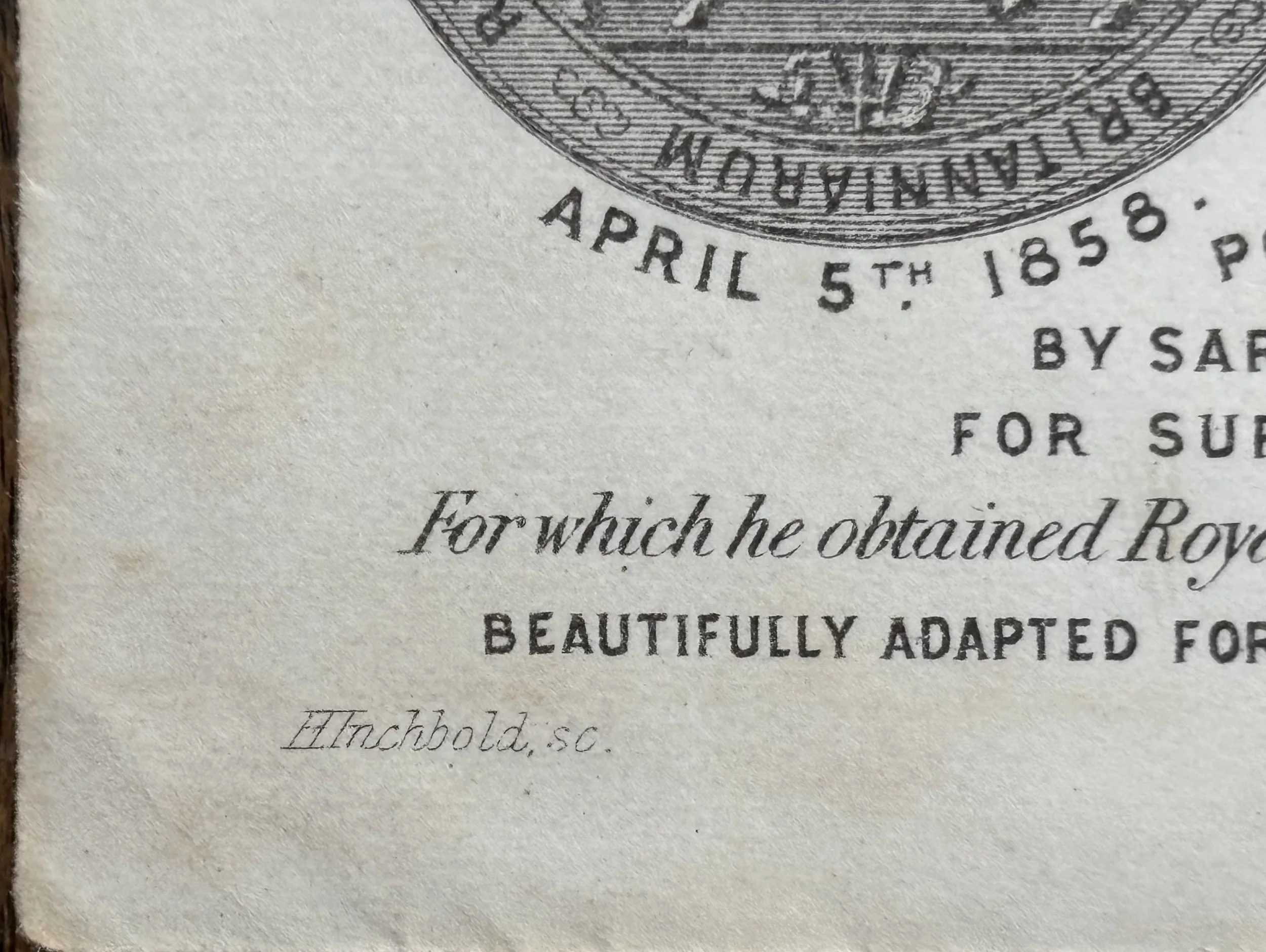
A detail of the receipt header showing the name of the engraver, H. Inchbold SC.
The receipt/invoice is dated 17th September 1864 and addressed to Whalley Esq. Whalley has not been identified, but considering Sarony’s other clientele including Queen Victoria it is possible George Hammond Whalley (1813-1878) who was at the time in his second term as the Member of Parliament for Peterborough (1852-3 and 1859-1878).
Whalley’s full order came to £7 17s 6d. Quite a sum at the time, The Bank of England Inflation Calculator suggests a value of over £800 in 2025 terms. The full order reads as follows:
Sept. 17th 1864
-Whalley Esq. to Oliver Sarony.
1435. 1 Plain Print. £1 1s 0d
“. 20 Carte de visite. £1 1s 0d
1355. 1 Plain Print of Mrs. £1 1s 0d
“. 20 Carte de viste of Mrs. £1 1s 0d
1434. 2 Plain Prints of Miss. £1 11s 6d
1356. 1 Plain Print of Mrs Dobson. £1 1 s 0d
£6 16s 6d
Extras. £1 1s 0d
£7 17s 6d
Paid in for O. Sarony sep 17th 1864.
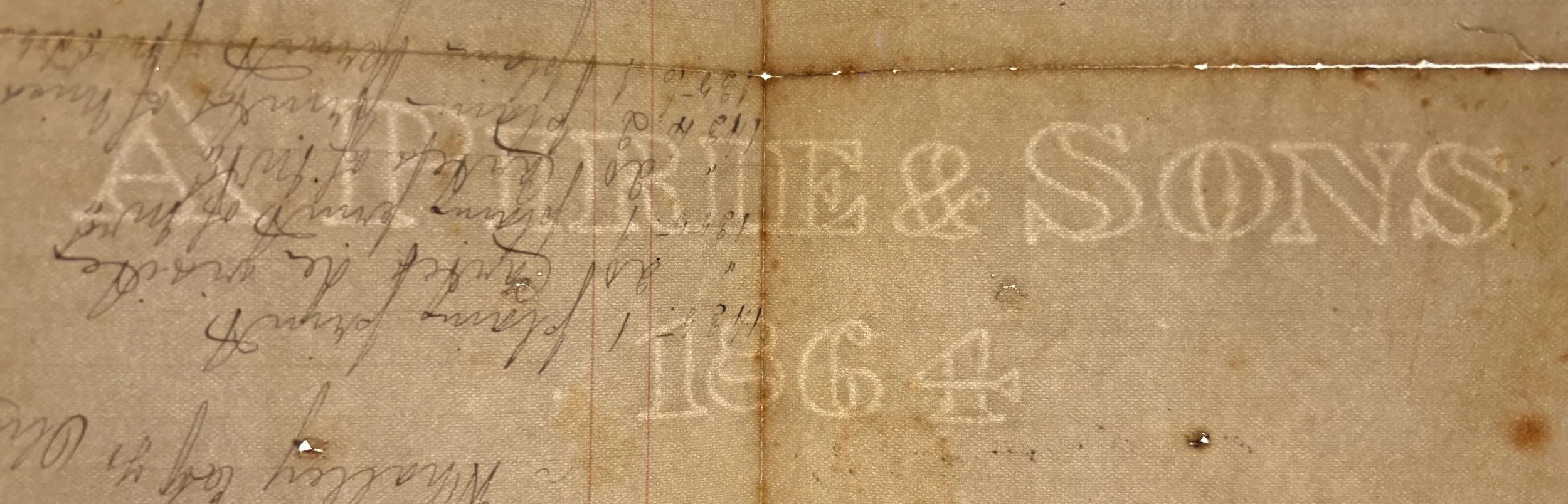
The paper is watermarked showing that it was produced by Alexander Pirie and Sons, Aberdeen in 1864